Daily Fare

This Day in History

Quote of the Day

Friday, October 29, 2010

For those celebrating

Happy Hallowe'en Links

Reviewing Collins

Armadale reviewed

Free Catholic Fiction E-Books

Free Catholic Fiction E-Books notice

Catholic E-Books Site

I can feel my iPad quiver in antici. . . .


pation.

"The Bride Stripped Bare. . .//The Large Glass"

"The Large Glass" a poem after Duchamp's famous work--"The Bride Stripped Bare by Her Bachelors, Even."

Brought to us via Books Inq.

Used Books for a Cause and Chocolate to Boot!

Better World Books serves a dual purpose--saving books from adding to our landfills and increasing world literacy rates.  In addition, according to Books Inq.  (I haven't been able to find it one the main site yet), they are offering a free-trade chocolate bar  for free with every order of three or more books.  Ah--notice came in an e-mail and the offer starts at the beginning of November. 

Hallowe'en Haunted Houses

Hallowe'en Haunted Houses--some great reading for your Hallowe'en.

The End of The Sound of Water

Sam Hamill's The Sound of Water

More haiku

The Liberal Gene and Comment

Being a Liberal and Hating Sarah Palin May Be Genetic Trait

and

Comment on the Liberal Gene

Book Zombies with a Fantasia on Robert R. McCammon

Books to bring back from the dead

I didn't realize that Robert McCammon had withdrawn his first four books from publication.  That's a real shame, because a couple of them are really superb and all of them are good.

I wonder whether the question is withdrawal or simply lack of republication, because when I look at his bibliography, I see all four listed, recognized and being published in Europe.  For me the least successful of the group was the premier effort Baal.  And even while a debut effort, I still liked it a great deal.  I loved Bethany's Sin even though it tracks Thomas Tryon's Harvest Home pretty closely.  Night Boat with its crew of Nazi Zombies reminded me at once of some of the more intense Italian Zombi films of seventies and eighties mixed with the classic Zombies of Mora Tau.  (Mora Tau doesn't get great ratings at IMDB, but most reviewing it probably didn't see it on late night television when they were 12 or 13 years old. ) And They Thirst was one of the best vampire books of the pre-contemptible (oops!) contemporary vampire age.  A Salem's Lot on steroids although the books share very little in common and I would rate each about the same.  And I've continued to engage with and love the more recent books--Usher's Passing and Boy's Life both stand out before the recent set of three mysteries set in Colonial America: Speaks the Nightbird, The Queen of Bedlam, and Mister Slaughter.  A writer less well known than his skill deserves.  And the exquisite Swan Song unfortunately stands in the shadow of the better known, and slightly lesser quality The Stand (considerably lesser quality if we consider that bloated paean to authorial self-indulgence known as the Uncut or Restored version).

You can sample some of his fiction here.

Life After Death?

Books Inq presents the point and has a lively discussion

On this matter, I have little concern.  My opinion is that an afterlife does exist; although whether or not it does, would not affect the faith I have in God. 

When I was quite young I had a dream that has shaped my way of thinking ever since.  I saw a gigantic angel--it was standing over a cityscape whose skyline was dominated by the Two Towers. The angel held two buckets (and here you can detect the literary influence) in one of which I could see fire, in the other of which I knew there was ice.  The angel said, "Do what you do not for hope of heaven or fear of hell, but for love of God alone."  It seems a good guideline for living in faith.

Thursday, October 28, 2010

Referenced in Chernow

Two books in the Parke-Custis library that George Washington had access to:

Conjugal Lewdness  Daniel Defoe

and

Aphra Behn's The Lover's Watch.

via Ron Chernow's Washington: A Life

The first of these might be of particular interest to those in communion with Catholic teaching.

The New Twain Autobiography

Mark Twain : Autobiography Vol. 1

via Books Inq.

Zen at Your Desk

Five Minutes of Zen

Oliver Sacks

An interview, and overview, and an excerpt of his new book.

The Anti-Obama Book Club

The Anti Obama book barrage

I don't know if the number is unusual or simply a symptom of politics in the new age.

Colm Toibin--A Life in Books

Colm Toibin--A Life in Books

Proposed: Any Person Regardless of Citizenship shall be allowed to vote. . .

"Arizona proof of citizenship law overturned. . ."

In a way, I understand this--laws of this sort can become the new Jim Crow laws of the land.  On the other hand, evidence of citizenship, depending upon what is required does not seem to be an undue burden to place on those who are to exercise the privileges of the land.  While I don't mind feeding children and educating them and even caring for those adults who do not reside in the land in full legality, I balk at allowing anyone, upon pain of perjury, to attest to citizenship and vote.  Who is going to track down those who have perjured?  How do we assure that the citizens who live, love, and support the land in which they live have the singular right and privilege of determining the direction in which the country goes?

Shakespeare respoken redux

"The Archeology of Sound"--Shakespeare in the "original pronunciation"

Forgive me if I am skeptical; however, I do regard this original pronunciation as something akin to Piaget's "child's conception of time."  The primary question--how do you know?  If you take "relict" dialects as your guide, how do you know that they have survived unchanged over four hundred years?  I'm skeptical and dubious, but willing to consider the evidence.

Two for M. Bovary

Madame Bovary I

Madame Bovary II

Two Turns of the Screw and an Usherine House

One Turn of the Screw

The second turn of the screw

And the House of Usher falls

The Invisible Bridge--Julie Orringer

The Invisible Bridge is a large, challenging, and ultimately satisfying novel about Paris and Hungary one the cusp of and in the crisis of World War II.  Miss Orringer writes well.  Sometimes very well, but sometimes compellingly well.  She draws you into the realm of her story and let's you journey with some very likeable companions through times both good and bad.

Let me start with one flaw--how serious, the individual reader must determine. While reading I had a strong sense of chronic dyskenisia.  I was reading about characters in 1939-1956 and yet had the feeling that these were twenty-first century sensibilities transplanted into mid-twentieth century characters. Many of the adjustments and ideas seemed to reek of the predominant subjectivism and relativism that is so much a part of the post modern world.  This was a small flaw that others did not see and which did not mar the experience of the whole book, but which did gnaw at me from time to time throughout the Paris section of the book.

The story centers around a young Hungarian student who travels to Paris to become an architect, while there he meets another Hungarian expatriate and falls in love.  The story chroninicles their Paris meeting and love and their eventual return to Hungary.  While it could have been a "holocaust" novel, it turns out not to be so much so.  It resembles more One Day in the Life of Ivan Denisovich--so more a tale of hardship, loss and oppression--how one lives through it and what becomes of one during it.

The writing is throughout well done and there are moments when it is truly impassioned.  However, overall, I came away a little disappointed.  I didn't feel the depth of engagement that I thought the author probably wanted me to feel for her characters.  And I can't identify the flaw that kept me from engaging--whether it is within myself as reader (probably) or in the novelist's work. 

Regardless, that flaw is insufficient for me not to recommend the book highly as a love story, a story of the war, a story of endurance, and a story of survival.  In the course of reading I learned a great many things about Hungary in World War II that I didn't know before and which make sense given the historical configurations of the two wWorld Wars, but frankly was never of much interest to me anyway.  I can say for the novel, that the author managed to make all of this of extreme interest and relevance.  There was not anything about the historical occasions that ever intruded upon the story line.

Recommended --****

Wednesday, October 27, 2010

For the Budding (or Mature) Novelist

Scrivener Beta for PC

The Perennial Ms. Christie

And Then There Were None

Augmented Reality--Try it Out

New Ways to see Old and often Inaccessibly things

Gladwell will make some sad, well . . .

Malcolm Gladwell on the good ole days.

Why Am I Especially Horrified by This?

The 49 Most Influential Men

via Books Inq.

Horrifying.  Okay, that's an overstatement, but certainly not reflective of those who influence me.  And if we are so easily influenced it would suggest that we are planktonic--drifting without much of a direction to start.

A Catholic View of The Children's Book

A review of The Children's Book

Peter Carey and the Parrot

Parrot and Olivier in America reviewed

I have to admit to enjoying that part I've read and I'm looking forward to getting back to it once I cross through the waterfall of books.

Making your Holmes in the Twenty-First Century

A review of Sherlock

The Mississippi and the Millenium (religiously speaking)

A view into Wicked River

A Profile of Post-Catholic Anne Rice

Anne Rice profiled

Many criticized Rice for leaving the Catholic Church.  I applaud her.  If you don't buy the doctrine, if you find it impossible to reconcile with your experience of the world, if you doubt the truth of where you are--you should get out and see the world.  I'd far rather have Anne Rice outside the Church and properly teaching Church doctrine by repudiating it point blank than within and claiming that all of her views fall in line with historic teachings,  The Holy Spirit moves as He will and He moves us by what interests and appalls us (for one thing).  Hurray for Ms. Rice following the courage of her convictions.

Roy on Kashmir--Sedition?

Author Arundhati Roy (The God of Small Things) faces sedition charges for remarks made about Kashmir.

I know little about the Kashmir question and the little I know leaves a lot to be desired.  But I do know that threatening anyone with imprisonment for sedition is certainly a way to highlight what that person is saying and bring it to international attention.

"And now some words from. . . Pascal."

"Because Blaise Pascal tells it like it is. . ."

Tuesday, October 26, 2010

Appalling Novelty

The most appalling Novelty books available

Excerpt from an Interview with William Faulkner

From a 1956 Paris Review Interview: Interview with William Faulkner

Published on the Web for Us to Delight In

"Trinity" a poem

Garcia Lorca's Nightmare

Frederico Garcia Lorca's Nightmare Play(s)

The Poet and the Ghost

Dana Gioia's Ghost Story

Shakespeare in the Orginal Voice

A strangely Irish accented Shakespearian English

A Nice Comment on Mr. Williams

"Saying the Wrong Thing"

What I like particularly:

Frankly, these folks are selling their ideals of tolerance short when they pretend that they aren't made nervous by the dress of certain cultures, whether that's an Arabic-looking man in a dishdasha or a young black man with low slung pants and a couple gold chains. Tolerance lies not in never having an emotional reaction to seeing someone, but rather in whether one treats all people as innocent and equal until proven otherwise.

I'm not particularly keen on the "virtue" of tolerance because it is by its nature elitist. (And I should say, this is not meant as a criticism of the writer of the piece above--others have different views of tolerance and it need not carry so negative a connotation as I have for it.)  Who am I to "tolerate" anything.  Tolerance comes from noblesse oblige; we tolerate because the poor savages don't know any better than to wipe their hands on the table cloth or their noses on the backs of their hands.

Kindness and respect are more to my liking.  Respecting the dignity of every person--even those who for reasons totally unaccountable to you frighten you.  For example, I will admit to being sometime frightened by the more extreme examples of piercing and body art that I see.  I don't know why I'm frightened, I just am.  Maybe it is the atavistic and empathetic fear of the needles and process that resulted in the modified body.  I don't know.  But I am frightened, just as some are frightened of clowns.  Nevertheless, one steps up to one's fear and says, "This too is a person looking for love and respect.  Perhaps the methods are misled, perhaps the means not to my liking."

I really believe, down in the deepest core of my being that most people desire only two things: love and respect, and to be left alone to pursue happiness in the way that is most meaningful to them.  For this reason, I find it difficult to complete condemn the burqa.  While to my western eyes it smacks of an oppressive system  (and honestly, here in Florida, my primary reaction is again empathetic: "Boy does that look uncomfortable! [as in much, much too warm in even an 80 degree October]), I cannot say whether the person wearing it feels oppressed or safe.  It is not for me to decide.  For this reason, I find it difficult to side with those who wish for a uniform ban, although I respect the motivations that prompt it, even as I find it perfectly reasonable that in legal and governmental systems, it is perfectly reasonable to be able to identify the person speaking, accusing, taking an oath, picking up children at a school.

Back to the quotation.  I would add or modify the last line to say, "Respect/Tolerance lies not in never having an emotional reaction to seeing someone, but rather in how the emotional reaction is translated into action."  It is the Henry Higgins school of gentlemanly-ness--

from Pygmalion, Act IV
George Bernard Shaw

The great secret, Eliza, is not having bad manners or good manners or any other particular sort of manners, but having the same manner for all human souls: in short, behaving as if you were in Heaven, where there are no third-class carriages, and one soul is as good as another.
 Your expression of tolerance is the evenness of your treatment of everyone.  But not entirely, because I would say contra Mr. Higgins, that it does matter good or bad manners.  It is the last part of the statement that is important "behaving as if you were in Heaven,"  were the essential dignity of every person is completely revealed.

Who Would Have Considered It?

Jane Austen was human

A Poem! Two Poems!

First from James Wright: "Listening to the Mourners"

Then from Wallace Stevens: "The Plain Sense of Things"

From Reinhold Neibuhr--"The Cruelty of Righteous People"

"The Cruelty of Righteous People"

For those who leap to criticize the excesses of Dawkins, Hitchens, and Harris, would do well to remember that often in the most excessive criticism, there is underlying truth--truth one would do well to recognize and excise.  In some sense, strident unbelievers are a gift to those who do believe because they expose some of the underlying hypocrisy, or rather some of the disconnect between right belief (orthodoxy) and right practice (orthopraxy). 

Just a memorable moment from the lengthy quotation linked above:

The criticism which Jesus levelled at good people had both a religious and moral connotation. They were proud in the sight of God and they were merciless and unforgiving to their fellow-men. Their pride is the basis of their lack of mercy. The unmerciful servant, in Jesus' parable is unforgiving to his fellow-servant in spite of the mercy which he had received from his master.
                                                                                                 --Reinhold Neibuhr

Monday, October 25, 2010

Entering Room

Emma Donoghue's Room reviewed.

One Last: 18th Century Disease

An interesting side-note on Washington's ailments.

from Washington: A Life
Ron Chernow

For someone with Washington's robust physique, the dysentery must have had a profound psychological effect. His body had suddenly lost the strength and resilience that had enabled him to cross freezing streams and ride through snowy forests. And it was not the first time he had experienced a sense of physical fragility. By the age of twenty-six, he had survived smallpox, pleurisy, malaria, and dysentery. He had not only evaded bullet but survived disease with astounding regularity. If these illnesses dimmed his fervor for a military commission, they may also have reminded him of the forgotten pleasures of domestic life.

We forget that the world we live in is peppered through with all sorts of things that would, given lesser medicine/hygiene, do away with us entirely.  

Another Visit with the General

What is fascinating about Chernow's biography is the way in which you see relatively small moments in history snowballing to become the Revolutionary War.  In the passage below, we have captured a moment in the French and Indian War, but we can see how its complaint and the realization that this is not how the Mother Country regarded the colonial states.

from Washington: A Life
Ron Chernow

Before leaving Philadelphia, Washington wrote to Dinwiddie and vented the bitter outrage at the inferior status foisted upon the Virginia Regiment: "We can't conceive that being Americans should deprive us of the benefits of British  subjects, nor lessen our claim to preferment. And we are very certain that  no body of regular troops ever before served 3 bloody campaigns without attracting royal notice. As to those idle arguments which are often times used--namely, 'You are defending your own properties.'--I look upon [them] to be whimsical and absurd. We are defending the King's Dominions." This statement represented a huge intellectual leap: Washington was suddenly asserting that the imperial system existed to serve the king, not his overseas subjects. The equality of an Englishman in London and one in Williamsburg was purely illusory. In time, the Crown would pay dearly for Washington's disenchantment with the fairness of the British military.

Why Am I Reading This--Jonathan Franzen Considered

Freedom reviewed.

More Seasonal Reading

The Little Stranger Sarah Walters, reviewed

Washington Impolitic

It's nice to see that the perfect lacks perfection.  Even in that Washington may have been the perfect man for his time  (and for ours).

from Washington: A Life
Ron Chernow

All summer and fall Washington was exasperated by military arrangements on the western frontier. He objected in strenuous terms to Lord Loudoun's decision to station Virginia troops at Fort Cumberland in Maryland, when it made more sense to keep them at Winchester, Virginia. Washington's tenacity on this issue led to a clash with Dinwiddie, who sided with Loudoun. Until this point Washington had prudently tended his relationship with the royal governor and was exemplary in bowing to civilian control. Now, in a terribly impolitic move, he bypassed Dinwiddie to lobby House of Burgesses speaker John Robinson, violating a cardinal rule of Virginia politics that the governor had final authority in such matters. The decision also smacked of disloyalty to someone who has consistently boosted Washington's career. The young man poured out his frustrations to Robinson, saying his advice to Dinwiddie had been "disregarded as idle and frivolous . . . My orders [from Dinwiddie] are dark, doubtful and uncertain: today approved, tomorrow condemned." The same day Washington aggravated matters by telling Dinwiddie that Loudoun had "imbibed prejudices so unfavourable to my character" because he had not been "thoroughly informed." Since Dinwiddie had been Loudoun's primary source of information, he would have interpreted this as direct attack on his own conduct.

On Jauary 10, 1757, throwing caution to the wind, Washington sent Lord Loudoun a letter so lengthy tht it runs to a dozen printed pages in his collected papers. It provides a graphic picture of the twenty-four-year-old Washington's ambivalence about the British class system. On the one hand, he flattered Loudoun unctuously even as he denied doing so. "Although I have not the honour to be known to Your Lordship, yet Your Lordship's name was familiar to my ear on account of the important services performed to His Majesty in other parts of the world. Don't think My Lord I am going to flatter. I have exalted sentiments of Your Lordship's character and revere your rank. . .my nature is honest and free from guile.

In the rhetoric of the revolution, we often forget this ingrained sense of class and place in the world.  It is interesting to read Washington kowtowing to his British superiors, and yet, it is entirely reasonable and logical within the world.  It just comes as something of a shock to read.

LoA Story of the Week--"In Goldman, Sachs We Trust"

"In Goldman, Sachs We Trust" John Kenneth Galbraith

A Lovely Meditation

A thoughtful and touching reflection on the OT Mass reading for yesterday.

This Weekend We Met the Bishop

The diocese of Orlando has recently received a new bishop.  I did not know until I went to Mass on Sunday--at Mass at which my son served.  There he was, mitre and crook, and he was a delight when he preached, making a real impression.

I invite you all to pray for the new bishop of Orlando whose installation is 16 December 2010 (according to this article).  I just hope we get to keep this one and we aren't just the perpetual training ground for bishops and Archbishops of bigger places.  (See our former bishop, also from Miami and now Archbishop of the Diocese of Miami.)

In Praise of October

"October" by Teresa Hooley

Truly the most glorious of months, October is praised.

Straub's Anthologies

A mention of the collections and a review of a stunning story by Jonathan Carroll.

Asking an Important Question

"What's the purpose of a book blog?"

Haiku Afficianadoes

The Second Annual Basho Haiku Challenge Chapbook

Within a link to five marvelous haiku.  The form is alive and well, it is good to say.  Much different than the original, as it should be if a form is to remain relevant--retaining all of the externals of compression and intense imagery, but varying the syllable count and other items as befits transition to another language and to another time. 

What is most interesting to me about haiku is the way they are like potato chips or m&ms.  That is, they invite gulping down by the handfuls, but they truly reward a meditative and lingering consideration.  It's amazing the way so few syllables can unpack.

A World of Nightmares?

A review of The Alchemaster's Apprentice by Walter Moers

My son has long sung the praises of Walter Moers and has, at this point, read everything that Mr. Moers has in translation.  Son often spends time bending my ear about these books, and from what he says they are compelling reading.  Too bad my own stack is so tall.  Perhaps I need to consider a rearrangement.

Poem of the Week

John Cornford  "Poem"

A love poem written during the Spanish Civil War.  I can't help but admire the gems that this series keeps bringing up.

Thursday, October 21, 2010

Our "Liberal" Media

NPR fires Juan Williams


via Books Inq.

Yep!  Protecting those first amendment rights--let's all hear it for NPR.

Shame on them and shame on anyone who would take umbrage at the very simple, non-bigoted statements that got him fired.  What happens to Juan in the circumstances probably happens to a great many of us, were we courageous enough to admit it.

Shameful enough to fire the man, but another constitutional right is to be able to face one's accusers.  They should have had the guts to talk to him and tell him to his face.  Shame, shame, shame.

Evernote Site Memory

I've just installed Javascript from Evernote that I hope will be useful to some who visit.  I know I'd like to see it a lot more often.  But let's see if it works.

Find out more about Evernote Site Memory 

Later:  Good idea if it works. Need to figure out what I'm doing wrong and will try again later.

Monster Duel

Jeckyll/Hyde v. Dorian Gray

One Last Moment with Washington for the Day

from Washington: A Life
Ron Cherow

At the same time Braddock provided Washington with an object lesson in mistakes that any general should avoid, teaching him the virtues of patient moderation. Braddock was hotheaded and blustery, was blunt to the point of rudeness, and issued orders without first seek proper advice. He also talked down to colonial governors "as if they had been infinitely his inferiors," said one observer, and was irate that the colonies failed to deliver two hundred wagons and 2,500 horses they had pledged. Washington listened to Braddock drone on, spouting prejudiced views with a narrow-minded insistence. Once committed to an opinion, he refused to back down, "let it be ever so incompatible with reason or common sense," Washington noted.

How often have I been sitting in any number of meeting rooms and witnessed among the participants similar behaviors?  We are all prone to it, some to a greater degree.  And perhaps that is why I find it best not to speak unless spoken to.

Zombies and Flannery O'Connor

The Reapers are the Angels reviewed

Two things:

(1) No, it isn't a mash-up.

(2) Gosh how I wish I had the kind of mind that could listen to a book and obtain anything worthwhile from it.  But to do so, I'd have to have pen in hand and be writing, and so it sort of undoes the theory of how audio-books help.  I've listened through a couple, but I often have difficulty retaining the plot threads, and quickly become restless if not bored. And that's a pity because I could "read" so much more if I had the capacity to absorb and retain information in this way.

Washington and Braddock

from Washington: A Life
Ron Chernow

Washington hinted that personal problems might hinder acceptance of the post. In fact, he was overwhelmed by the demands of planting his first spring crop at Mount Vernon and confided that the estate was "in the utmost confusion." Aggravating matters was that he had nobody to whom he could entrust management of the place. As he contemplated service under Braddock, Washington struggled with his special bugaboo, the vexed matter of colonial rank. He still dreamed of a regular army commission, valid for life, but the best Braddock could award him was the temporary rank of brevet captain. Still balking at this demotion, Washington agreed to serve as a volunteer aide to Braddock, and the general, in turn, allowed him to devote time to his private affairs until the army headed west. To brother Jack, Washington explained that under this arrangement, he could "give his orders to all, which must be implicitly obeyed," while he had to obey only Braddock. Already preoccupied with matters of honor and reputation, Washington feared that people might question his motives and suspect him of being a power-hungry opportunist--a recurring leitmotif of his career. Serving without pay would silence such potential naysayers. His sole desire, he told John Robinson, speaker of the House of Burgesses, was to serve his country: "This, I flatter myself, will manifestly appear by my going [as] a volunteer, without expectation of reward or prospect of attaining a command." This theme of disinterested service--honored mostly in the breach when he was young and in the observance when he was older--would be one of the touchstones of his life.

What I learn from this is reinforced in so many life lessons.  Live as what you want to be--live the truth you want to exhibit, and (with due help from Providence and those around you) you will eventually become that. Washington wanted to be the disinterested man of public affairs, and while his motives early on might have been mixed, acting the part allowed him to become what he saw as the paragon.  In becoming that paragon he became also a legend.  It is good to strip away much of the clutter around the person of Washington and discover what is truly and profoundly admirable in a man who was, after all, only a man--but a great man--one of the greatest (of European descent at least) that this country has ever known.

The Magisterial Philip K. Dick

A review of Flow My Tears, the Policeman Said

This may have been one of the first of the PDK books I ever read. (I might have read The Man in the High Castle first) And when I did so I was completely wowed.  To this day I remember the surreal outcome of the novel and its profound statement about how what people do affects the lives of people they may not even know.

Review of a film about Mishima

Mishima: A Life in Four Chapters

Here is an author I came to after the end of the spectacle of his life.  As a teenager, there was a certain romanticism to this.  But I've never much appreciated Mishima's work in comparison to other contemporaries and even older authors.  I would place Junichiro Tanazaki, Natsume Soseki, Akutagawa, and Yasunari Kawabata all higher up on the to-read list.  But this reviewers comments persuade me that perhaps I should reevaluate my stand.

Prothero on Audio

Religious Literacy on audio reviewed

My primary problem with Religious Literacy is that much of it struck me as a definitive outsider's point of view.  That is the point of view of one who studies religion as though it were some sort of insect.  I don't think he made clear some of the faiths he was seeking to describe (I had this feeling particularly in the sections regarding Buddhism).  But,  I have to back off and say that the work is intended as an introduction to a wider audience, and that isn't necessarily the place to load in all of the nuance that makes a faith a faith.  So, to be fair, as a broad introduction, I thought the book served well.

Colm Toibin's Short Stories

The Empty Family reviewed

Again, an astigmatism or near-sightedness, but I have yet to work up much enthusiasm for Colm Toibin's work.  I don't know why.  I start out wanting to like it and find myself abandoning it midway through. 

Vincent onlilne

Tim Burton's Vincent available online

Here's A Shocker--Dalai Lama

Shocking news--the Dalai Lama talks about Compassion

Carny Classics

A review of several books on the lives of Carnys.

Strangely and profoundly disturbing.  Some things just affect me differently than they seem to affect others.

Social Networking

A bit of silliness in the last post reminded me of some silliness yesterday.

In the post I noted that I could observe reactions "real time;" of course, I cannot do anything of the sort.

Yesterday someone presented some information about a "social networking" piece of reading software.  When I stopped and considered, I commented, "Ironic that we call it social networking, when mostly it is a way for people to sit in their basements and never meet anyone at all."  Perhaps it should be called anti-social networking.

M. Bovary

M. Bovary considered--I love book-note like continual blogging.  I love to see people's reactions in "real time" as it were.

And again, M. Bovary

Interestingly, nothing would tempt me back to the book.  While acknowledging it as a classic and even giving a nod of the head to those who commend the style--there is something so oppressive about it that I couldn't be persuaded to read it again on a bet.  But I love reading other people's reactions to it.  Perhaps they will eventually erode the monumental antipathy I have toward it.  (An antipathy, I might point out mingled with profound appreciation.  Let's face it, Flaubert and I just don't seem to get along too well.)

A Meme Shamelessly Stolen

from The Reluctant Draggard

Fifteen Authors who have influenced me

1. St. John of the Cross/St. Teresa of Avila
2. St. John (author of the The Apocalypse)
3. Charles Baudelaire
4. John Keats
5. Stephane Mallarme
6. Basho
7. Lao-tzu/Chuang-tzu
8. Salvidor Dali/Rene Magritte
9. James Joyce
10. William Shakespeare
11. Henry Vaughn/Richard Crashaw
12. Li Po/Tu Fu
13. Virginia Woolf
14. Henry James
15. H.P. Lovecraft

List not necessarily in order of degree of influence--and influence includes not merely flavoring the writing by changing my life. Surprise, I had to stray a little because while some of those listed above are not authors in any way that people of common sense would define the term--they certainly are story-tellers. I doubled up on some simply to cheat and have more--because there is probably a list a mile long.  I did not list Ray Bradbury, Robert Heinlein, Arthur C. Clarke, and a host of others who were all profound influences at one point or another. 

A more difficult task would be to list those under whose spell you still walk.  My list would include 1, 2, 9,  perhaps 13 and 14.  I would add, perhaps, Yiyun Li, whose prose and style and poise, and story-telling acumen I profoundly admire--and I am awaiting additional work by other more modern influences to decide.

Wednesday, October 20, 2010

Fascinating New Poem of the Week

I had missed it on Monday "Dragon Talk" by Fleur Adcock

Wonderful, delightful, bright, and interesting poem.  Witty,  I guess, is the best term.

Sage Advice

Derived from Ron Chernow's biography, but found in full here, George Washington's advice to George S. Washington (see page 2 of the letter):

"Should you enter upon the course of studies here marked out you must consider it as the fulfillment of your education, and, therefore, as time is limited, that every hour misspent is lost forever--and that future years cannot compensate for lost days."

While he is speaking to someone quite useful, the words here are probably useful for us all to remember.  Time is limited, wasted time is forever lost--but more importantly, nothing you can do in the future can fully recapture the opportunities seized today.  I think we sometimes forget that--sometimes we seem to think that we will be allowed endless revisits of the same day, the same opportunities opening before us in the same ways.

The Problem with Yiyun Li: Gold Boy, Emerald Girl

The problem with Yiyun Li is her essential unexcerptability.  One endangers the tight structure of the story, one threatens to reveal the hand, to spoil the gradual unfolding that each story undergoes.  No matter what you pick to show your point, you are in constant danger of overstepping and telling the prospective reader too much. 

This control, this series of well-managed epiphanies that never become formulaic, is the power and the glory of Yiyun Li's work.  Her prose, light and delicate, unfolds to reveal with the blossom of the rose, yet another blossom.  Yes, there is a fractality about her writing that is unmatched in any modern writer.  There is a delicacy and an obstinancy at the same time.  The stories are inevitable just as they are completely surprising.

I have deliberately not finished the book (Gold Boy, Emerald Girl) yet, knowing that once I am through, I am deprived of any new Li until she should deem to grace us with a new work.  The other night, as I picked up the book to take in yet another story, I saw how far my bookmark had progressed and I let out an audible gasp of horror. I looked, incredulous, and wondered how it could be that I had gotten so far without having noticed the passage.  I vowed to slow down and to take my time with the rest of the book.  And yet, there is the inexorable impulse, the desire to wolf down the last third of the book all in a gulp. 

Ah, for more writers who affect me this way.  What sweet sorrow and joy to read another line, another paragraph, another story, knowing that I will soon enough come to the end, and the joy of the new will be gone, leaving only the joy of revisiting all that I had already partaken of.  There is joy here too, but not of the same sort--pleasure, but not the pleasure of the new adventure.

The General and the General

Another highlight from Chernow:

from Washington: A Life
Ron Chernow

If Mary Ball Washington comes across as an unbending, even shrewish, disciplinarian, one can only imagine the unspoken dread that she, too, experienced, at being widowed at thirty-five. She had to manage Ferry Farm, tend five children ranging in age from six to eleven, and oversee dozens of slaves. Gus's death forced Mary to eliminate any frills of family life, and her spartan style as a businesswoman, frugal and demanding, had a discernible impact on her son. "In her dealings with servants, she was strict," writes Douglas Southall Freeman. "They must follow a definite round of work. Her bidding must be their law." With more than a touch of the martinet in her forbidding nature, Mary Washington displayed a powerful capacity to command, and one is tempted to say that the first formidable general George Washington ever encountered was his own mother.

Regarding Washington

Ron Chernow sets himself a task in a bit of prose that could be interepreted, in the wrong context, as hubris:

from Washington: A Life
Ron Chernow

In recent decades, many fine short biographies of Washington have appeared as well as perceptive studies of particular events, themes, or periods in his life. My intention is to produce a large-scale, one-volume, cradle-to-grave narrative that will be both dramatic and authoritative, encompassing the explosion of research in recent decades that has enriched our understanding of Washington as never before. The upshot, I hope, will be that readers, instaed of having a frosty respect for Washington, will experience a visceral appreciation of this foremost American who scaled the highest peak of political greatness.

Chernow's approach to Washington is large, but incomparison to earlier works by Flexner (four volumes, which I have read) and Freeman (seven volumes, which I have not read), this is relatively svelte approach to one of the great and enigmatic characters in the American Pantheon.  When I was under the influence of Jefferson, I thought him, as Jefferson did, a rather dull-witted dolt of a man who chanced into a position of power despite vast and airy incompetence.  I have come to regard that view as folly, and now have to fight off my negative impression of all things Jeffersonian, remembering as I do, how wrong I was about Washington.

Joseph Ellis wrote a study of Thomas Jefferson called American Sphinx, but I rather think the epithet misplaced, because Washington is one of the most complex and most completely hidden and "opaque" of the founding fathers. Chernow comments on this:

source as above

From a laudable desire to venerate Washington, we have sanded down the rough edges of his personality and made him difficult to grasp. He joined in the conspiracy to make himself unknowable. Where other founders gloried in their displays of intellect, Washington's strategy was the opposite: the less people knew about him, the more he though he could accomplish. Opacity was his means of enhancing his power and influencing events. Where Franklin, Hamilton, or Adams always sparkled in print or in person, the laconic Washington had no need to flaunt his virtues or fill conversational silences. Instead, he wanted the public to know him as a public man, concerned with the public weal and transcending egotistical needs.

Insightful, sharp-eyed, and clearly written, Chernow's biography of Washington promises to be like his two other magnificent biographies of Hamilton and J. P. Morgan and family.  I have penetrated enough into it to say for certain, but the biography shows a lively pace and dispenses with the endless and tedious trial of every detail about Washington's childhood and upbringing--limning for the purposes of fuller understanding, those events, incidents, and influences that will better support the bulk of the book devoted to the founding of a career and a legend.

About Camus's Philosophy

About Camus's Philosophy, sort of?

Whatever it is about, it is interesting reading.

Another by Alexander McCall Smith

Ah, Dostoevskian in his output, A Conspiracy of Friends, one of the second set of serial novels by the redoubtable author of the Number One Ladies Detective Agency series.

A Murder in Salem

Salem Murder, and not the ones you think

Ah, the Sweet, Sweet Scent of a New Manifesto

Robert E. Howard inspires a New Manifesto

Who'd a thunk it?  And, is it worth it?

"Rumors of my demise. . . "

The physical book gone in five years?

Seems, shall we say, unlikely. (In other words, I agree with the writer at So Many Books). After all, one can still buy Vinyl.  Certainly the centrality of the physical book may give way--but it is a technology that is unparalleled for readability, portability, and any number of other abilities that will end up making it durable.  Is it possible that technology will completely replace it?  Let us say, it isn't out of the question--but I don't see it gasping its last just yet.  But then, I've never been much of a Cassandra.

Ah, Remember the Days of "Triumph of the Will"

The effulgence of demagoguery revisited: N. Korea paves the way for a successor

Two Versions of Rilke

"Autumn Day" by Rainer Maria Rilke in two translations

Eudora Welty

An introduction and appreciation of the inimitable Eudora Welty--one of our most unjustly neglected writers.

Matthew Arnold's "Morality"

A poem for the day, Matthew Arnold's "Morality"

Tuesday, October 19, 2010

Jerome K. Jerome

For those who have not previously encountered it--a review of Three Men in a Boat

JF Lists His Favorites

Jonathan Franzen's Favorite Fiction List

For Diehard DFW Fans

Transcription and reading of a DFW fragment

Roth's Latest Revisited

The Complete review looks at Nemesis

On William James

On William James

via Books Inq

I have to say that I have always found William James imponderable; however, until recently, I could have said the same of Henry, and so perhaps it is time to visit William again.  He certainly sounds as though he would have something to say to me at this point in my life.

And Speaking of Supernatural Fiction: M. R. James

Last night I picked up once again Ghost Stories of an Antiquary on of M. R. James's books dedicated to the stories written for and shared during various Christmas gatherings.  And once again, I was caught up in the hands of a master.  I do not usually review an individual story, but the first of the tales--"Canon Alberic's Scrapbook" reminds me of all the reasons why James is at the very top of my list for those writing supernatural fiction and ghost stories. 

Most of James's stories are unclassifiable.  Is "Canon Alberic's Scrapbook" a ghost story?  Perhaps.  Is it a piece of supernatural fiction?  Undoubtedly, but that is almost as helpful a description as saying that it is a short story. Is it a "horror" story--undoubtedly it has its horrors, but in the class of Lovecraft and King, no.

"Canon Alberic's Scrapbook" traces the journey of a man interested in old churches and old manuscripts to a village somewhere in France.  At this village he meets with a "sacristan" of an old Church who has in his possession a remarkable scrapbook that contains all manner of interesting bits and pieces from Ancient Bibles and Christian writings and, well, something else. 

What is remarkable about the story is the almost sleight-of-hand ability James has to build atmosphere and to create an interesting and, yes, haunting story from the merest scraps of incident.  I came away from the story more "spooked" than I have been in many a year.  And the terror of the thing lingers with me--not in a look over your shoulder sort of way, but in a more subtle, chilling way--a way I would describe as delectable.

M.R. James did not make the transition to the big screen in any significant way.  However, except for the very ending, foisted on him by the studio, Jacques Tourneur's remarkable version of "Casting the Runes" is completely faithful to the story.  Do yourself a favor and see if you can find Night of the Demon (a.k.a. Curse of the Demon) for viewing sometime this month.  It nicely expresses in cinematic form what James does so remarkably well in writing.  And while you're at it, pick up Ghost Stories of an Antiquary or one of its sundry related books.  "The Mezzotint" will be familiar to anyone who recalls the old Night Gallery series, and both "Count Magnus" and "'Oh Whistle and I'll Come to You, My Lad,'" are worth the price of admission.  Given that you can get these easily in e-book form all over the web--admission need not be pricey.

Virginia Woolf on the Supernatural and Henry James

On the Supernatural in Literature

On Henry James's Ghost Stories

On the Nobel Peace Prize and Liu Xiaobo

An Open Letter on Liu Xiaobo

I'm nearly reluctant to publish this because every time I mention Liu Xiaobo, I get various partisans crawling out of the woodwork to instruct me on how Liu Xiaobo is legitimately a guest of the Chinese Government and I have no right to say anything at all about it because I do not live in China.  Fortunately, in the United States, we have every right to speak in total ignorance and show the world how really unwise we are--and so I do, because I admire Liu Xiaobo's passionate and principled fight for freedom in China and by example, in the world.

David Lynch and Paul McCartney

Lynch interviews McCartney on TM

Shelf Love Considers Yancey. . .

and comes to much the same conclusions as I did, about What Good is God at least.  There are several of Yancey's books that still appeal after many years of separation.  However, some don't wear well (with the same person) over time.  I've found that I've been able to reread only a couple with any significant insight, remarkable among them Soul Survivor--biographies of 13 people who helped to form Yancey's faith.

The Niceties of Novels

"Novels Don't Need to be 'Nice'"

Another Review of Full of Grace

Full of Grace reviewed at First Things

Monday, October 18, 2010

Sources to Read on the Abuse Scandal in the Church

Some sources that tend to be more even-handed than some of the popular media

Horrors: We Nominated a Mere Liberal!

On Vargas Llosa's winning of the Nobel Prize

Philip Roth's Latest

A review of Nemesis

I would rank this in my "challenging" list both for subject matter and author.  So perhaps I need to consider it.

On Paglia on Sex

Prisoner of Sex

Via Books Inq

Living Safely with Science Fiction

How to Live Safely in a Science Fiction Universe reviewed

Brodsky and Jackson

Joseph Brodsky and Shirley Jackson's "The Lottery"

A Visit with the Next Queen of Heaven

The Next Queen of Heaven reviewed

The Ideals of the Sikhs

I read broadly in matters religious and find much to admire in the faiths of the world.  Most particularly, I find the convergence of certain themes in faith quite provocative.  I draw these reflections from one of a very nice series on world religions.  This one Sikhism by Nikky-Guninder Kaur Singh provides an overview of a faith much misunderstood, and perhaps not even on everyone's radar.

I excerpt parts of a discussion regarding the ideals of Sikhism.

from Sikhism
Nikky-Guninder Kaur Singh

Worship of the One Ultimate Reality--Sikhs worship what is to them the Ultimate Reality, the timeless, formless force that is above all things and present in all things. . . many Sikhs feel that at dawn and dusk they can more easily focus their minds on the Ultimate One. Morning and evening prayers are offered in the gurdwara, or Sikh house of worship.

Dignity of labor--Earning one's living by honest work and working hard for one's livelihood are good deeds that earn merit toward a better life now and in the future.

Equality of all people--All people are equal because the Divine is present in everyone. Sikh's reject all distinctions of social class, race, and creed because they are artificial and because they separate people from the One Ultimate Reality. Men and women have an equal voice. Everyone is welcome to participate in the life of the Sikh community; no one is excluded.

Service--Sikhs express their beliefs through service to the One by reading from scriptures and helping with the upkeep of the gurdwara. They also serve the Sikh community by helping fellow Sikhs. . .[and] the disadvantaged outside the Sikh community, giving both money and time to charity.

Community--Fellowship is an act of faith. Sikhs everyone consider themselves to be a family united through the grace of the ultimate reality. . . . They freely extend hospitality and aid to other Sikhs, both friends and strangers.

The essential equality of all people is one of the radical things that Jesus taught and that Christians have fairly consistently ignored.  He dined with people in all states.  He had women among his entourage and within the group of his disciples.  In the face of the society in which he lived, this was a radical departure from prior convention.  However, too often, many Christians tend to focus on those things that divide rather than those that unite. How often have I heard sermons of "Women be submissive to your husbands. . ."  without continuing to the powerful qualification that Paul places on that submissiveness and without uniting it to the mutual submission that comes with marriage (and which has a prominent place in Paul's letters as well).

I sometimes wonder why we are so reluctant to gather up what is good in all of the world's faiths and to incorporate those things into our own practice.  We would do well to be more inclusive, less divisive.  We would do well to recognize the equal dignity of all people and to act on that.  Words are insufficient.  As James says, "faith without works is dead."  The Sikhs may take this to their own extremes, I do not know, but I look at these ideals and see much that is worthy of reflection and contemplation in my own practice.

Perhaps more later.

William Gibson

Zero History Pomo Spy Thriller or Cyberpunk--you be the judge

Shakespeare's Sonnets

Shakespeare's Sonnets reconsidered

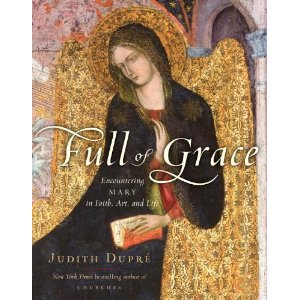
Full of Grace--Judith Dupré


Full of Grace
Judith Dupré
Random House; New York, 2010
November 2, 2010 release date
Complementary Review Copy


I arrived home Friday to find myself greeted with an entirely unexpected gift. Full of Grace: Encountering Mary in Faith, Art, and Life by Judith Dupré is a strange sort of book.  Part commonplace book, part art and art history, part personal reflection, it is a book that explores the person and idea of Mary from multiple viewpoints, and ends up giving a very interesting, sometimes enormously satisfying portrait and insight into that most enigmatic of Saints.

I was a little concerned by some of the publicity material that accompanied the book, in one quotation Ms. Dupré says, "I wrote the book for people like me--who embrace a religious tradition but don't hesitate to respectfully question it--and for those who aren't particularly religious but year to find meaning in their lives."  As any one who has read much in Catholic literature, the first part of that quotation can mean anything from picking around the edges to total deconstruction.

There may be total deconstruction here.  If so, I was oblivious to it.  I took to heart the lovely, often-full page representations of Mary--both traditional and contemporary.  Each of these comes with a (sometimes lengthy) description that sets the piece in time, space, and cultural context.  Images include Ancient and Renaissance images we are so familiar with as well as contemporary settings that may be off-putting to some, but represent the plain story in plain context--such as Raphael Soyer's The Annunciation, the author's notes for which provide insight and a depth that I might not have attained on my own.

In addition to the artwork, the text is sprinkled through with prayers, scripture passages, and other quotations from Saints, sermons, and sinners, reflecting on Mary's story or on Mary.   For example, in the section about Mary in the Qur'an, we find the following quotation:

"A bridge joins more than just two banks of a river, it connects people to each other and to their dreams."   Linda Figg, I-35W Bridge designer, 2008.

The text for this same subject is thought provoking.

from Full of Grace
Judith Dupré

One of Mary's most profound and persistent roles has been as a bridge builder. She joins together what had once been separate, whether traditions, cultures, or peoples, with perhaps no bridge more momentous than the one stretched tenuously between Christianity and Islam. Mary, included among Islam's "four perfect women," is the only female name in the Qur'an, its central holy text. Muslims venerate Mary for her holiness and purity, and, in some schools, as a prophet.  Allah, the angels said, preferred Mary above (all) the women of creation (Q 3.42). There is more about Mary in the Qur'an's 114 sura, or chapters, than in the New Testament: thirty-four Qur'anic verses identify her specifically, and the nineteenth sura bears her name. . .

In this meditation, which, respecting Muslim tradition contains no visual, the author goes on to speak of Mary as bridge-builder and caps it off with another quotation.  "Mary saves us from denying the kinship among Judaism, Christianity, and Islam: All three live in her spiritual presence"-- Charlene Spretnak Missing Mary, 2004.

The book builds in this continuous round--the beauty of the portraiture of Mary, the po