Posts

Showing posts with the label Reading Notes

John Galt et al.

Image
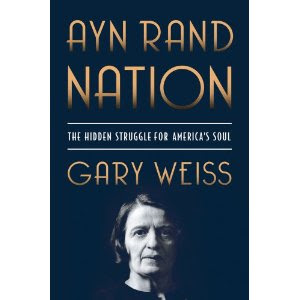
It occurred to me the other day, while reading a remarkable study of the figurehead and inspiration behind our latest round of privateering, that we've really missed the mark.  It really occurred after I attempted to watch Atlas Shrugged in its most recent film incarnation, not wishing to subject myself to the turgid prose and rancid philosophizing of the one person most responsible for the progressive decline of anything good to say about the libertarian ideal.  If   The Book of Mormon could spawn a highly successful Broadway appearance, why not Atlas Shrugged: The Musical ,  or better yet, Who is John Galt?: The Musical. It could be paired with a revival of Springtime for Hitler  or Hitler on Ice: The Ice Capades Spectacular (as featured at the end of History of the World: part I). Think of the possible profits--the ability to exploit the poor and downtrodden--the possibility of proselytization. On a more serious note--a more sobering and bracing stud...
It's Easy Being Green

from The Amish Way Donald B. Kraybill, Steven M. Nolt, David L. Weaver-Zecher David Kline was green long before it became trendy. He summarizes his theology for eco-friendly living in these words: "If one's livelihood comes from the earth--from the land, from creation on a sensible scale, where humans are a part of the unfolding of the seasons, experience the blessing of drought-ending rains, and seek God's spirit in all creation--a theology for living should be as natural as the rainbow following a summer storm. And then we can pray, 'Help us to walk gently on the earth and to love and nurture your creation and handiwork.'"

Revisiting To the Lighthouse

Image
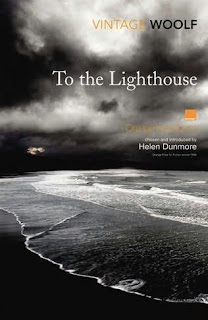
As anyone who may look into this blog from time to time undoubtedly knows, Virginia Woolf wrote a number of modernist masterpieces.  It's hard for me to choose from among her novels, to name the very finest, because each has its own merits, its own unique contributions to the literary world.  But surely it would be impossible to consider modern literature without Mrs. Dalloway with its unfortunate light into Woolf's own life and demise.  Equally, To the Lighthouse , is remarkable for its insights into how a family thrives and does not thrive, how two people relate and refuse to relate. You really don't get much more pointed in such a discussion than this passage found on the very first page of the novel: from To the Lighthouse Virginia Woolf "But," said his father, stopping in front of the drawing-room window, "it won't be fine." Had there been an axe handy, a poker, or any weapon that would have gashed a hole in his father's bre...

What "The People" Means

from "The People" in China in Ten Words Yu Hua This was a key moment in my life. I had always assumed the light carried farther than human voices and voices carry farther than body heat. But that night I realized that it is not so, for when the people stand as one, their voices carry farther than light and their heat is carried farther still. That, I discovered, is what "the people" means.

Amusing Moments

I'm not certain if I will launch seriously into this book, but these two moments only a little apart are amusing. from The Banquet Bug Geling Yan He tries to describe the texture of the delicate flesh, the subtle contact between the meat and this palate and tongue, the slippery sensation it gives when it passes the entrance of the throat, leaving the oral organs in such wonder. But he has no vocabulary for it. Putting together his education with hers, they can barely write a decent letter to their parents without checking a dictionary. **** A neighbor woman yells outside the plastic curtain, asking what's taking them so long and whether they shower hair by hair.  Laughing Dan Dong yells back that he has twelve toe to scour.

Being and What It Entails

from The Marriage Plot Jeffrey Eugenides For thirty-five years she'd been inspecting her corn with Mendelian patience, receiving no encouragement or feedback on her work, just showing up every day, involved in her own process of discovery, forgotten by the world and not caring. And now, finally, this , the Nobel, the vindication of her life's work, and though she seemed pleased enough, you could see that it hadn't been the Prize she was after at all. MacGregor's reward had been the work itself, the daily doing of it, the achievement made of a million unremarkable days. This is how a life means--not in the light of the expectation of others or of our own unreasonable expectations of ourselves, but through following a passion that allows us to BE in a way that no other thing can.  A million unremarkable days that may lead to an overwhelming question--or it may lead to silence. We fail to understand that meaning isn't something you make by willing to make it, b...

Why I'm So Glad I Missed Deconstruction and Post Modernism

The tyrrany of the deconstructionists/semioticians as evinced by Jeffrey Eugenides: from The Marriage Plot Jeffrey Eugenides      He flipped the pages until he found the one he wanted.  The he returned to the bed and handed the book to her. I Love You je-t'aime /I-love-you As she read these words, Madeleine was flooded with happiness.  She glanced up at Leonard, smiling.  With his finger he motioned for her to keep going.   The figure refers not to the declaration of love, to the avowal, but to the repeated utterance of the love cry.  Sudeenly Madeliens happiness diminished, usurped by the feeling of peril. She wished she weren't naked. She narrowed her shoulders and overde herself with the bed-sheet as she obediently read on.      Once the first avowal has been made, "I love you" has no meaning whatever. . .       Leonard, squatting, had a smirk on his face. Utter foulness.  Those who would s...

The Shock of the New in the 16th Century

from When I Am Playing with My Cat, How Do I Know That She Is Not Playing with Me? Saul Frampton      Around this time a fog descended over northern Europe. It covered the Rhine, merging with the reed beds and sea mists. It cloistered the churchyards of France. It slipped inside books, it tarnished sword blades.  It scaled the high walls of Oxford and surrounded Aristotle. It seems to enter flesh itself, and confuse the identities of thins and the very boundaries of mater. And then it settled in men's minds. . . .      Scepticism arrived as a new and intoxicating intellectual force in the sixteenth century.

My Focus Needs More Focus

Flitting like a bumblebee from blossom to blossom--my reading flung wide over the entire field, I'll never make it back to the hive: from When I Am Playing with My Cat How Do I Know That She Is Not Playing with Me? Saul Frampton But with the hardening of religious attitudes that inevitably resulted, Stoicism began to snowball, almost in a kind of ideological feedback loop. For what made is so difficult to displace as an attitude was the fact that it was seen to be quintessentially noble, honourable-- male --and no self-respecting sixteenth-century man who called himself a man would beg to differ, as is affirmed in an emblem from Henry Peacham's Minverva Britannica (1612):  Amid the waves, a mightie Rock doth stand, Whose  ruggie brow, had bidden many a shower, And bitter storme; which neither sea, nor land, Nor JOVES sharpe-lightening ever could devoure: This same is MANLIE CONSTANCIE of mind, Not easly moov'd with every blase of wind. And if so, it speaks vol...

On the Strength of the Inclination to Bad

from When I am Playing with My Cat, How Do I know That She Is Not Playing with Me? Saul Frampton Our zeal performs wonder when it seconds our inclinations to hatred, cruelty, ambition, avarice, detraction, rebellion. But moved. . . toward goodness, benignity, moderation, unless by miracle some rare disposition prompt us to it, we stir neither hand nor foot. Our religion is intended to eradicate vices whereas it covers, nourishes, incites them.  (Quoting Montaigne) All too true and frightening, and so how much more frightening, then, when words, spoken innocently enough and without guile or intent to deceive can be used to foment division and unrest.  Words of faith, rightly used and wrongly construed still result in the negative that Montaigne conceives here.  So our doctrine must not only be sound, but soundly worded so that there can be nothing within it that can be taken to detract from the value of another human being--nothing that can be interpreted to mean th...

On Homosexuality (Incidentally)

One issue I never tire of tiring of is the question of homosexuality whenever a relationship, of whatever sort, occurs between two men.  The latest example to tweak me in this way is from a very fine (so far) study of Montaigne--the second in as many years. from When I Am Playing With My Cat, How Do I Know That She Is Not Playing With Me: Montainge and Being in Touch With Life Saul Frampton      Montaigne's letter is clearly a moving testament to his friend. But the question that inevitably raises itself is to what extent was there more than friendship at stake--that is to say, was it a platonic relationship or a romantic one?      The idea that the two men's relationship was a homosexual one is by no means implausible, but neither is it necessarily the case: Montaigne later adds to his essay a reference to: 'that other Greek licence . . . justly abhorred by our conscience', meaning homosexuality, a crime one of his schoolmasters, Marc-Antoine M...

Kerouac's Novel as Religious Revelation

From very early on in the novel: "Somewhere along the line I knew there'd be girls, visions, everything; somewhere along the line the pearl would be handed to me." Kerouac argued that his novel was not an encouragement to much of what followed him, but rather a quest, a quest for a kind of religious salvation.

Kerouac Sketching Out America

Image
from Book of Sketches Jack Kerouac   Ah Neal--the shaggy whiteface cows are arranged in stooped   dejected feed, necks   bent, upon the earth   that has a several mood under several   skies & openings--Ah   the sad dry Land ground   that's open between grasses whip't bald by the endless Winds--   the clouds are bunched up on the Divide of the horizon, are shining   upon they city--the little fences are lonely-- The commentary made in a journal entry on an earlier passage works as well for this: There is about this a poetic naivete that is endearing because it is undemanding. The lines break where the lines break without much thought of rule or order or consequence or meaning or rhythm or any of the other guiding lights of well-considered poetry--and yet because it lacks these almost by design, it has an kind of swinging, free and open rhythm--a movement all its own and not replicable without trying and trying ...

The Poetry of William Carlos Williams of Rutherford--Wendell Berry

Literary criticism is the sincerest form of fiction.  It wasn't actually this book that inspired the thought, but it helped to carry the thought to its fruition--I was reading a book on Ulysses by one of the great Joyce scholars and thought what an elaborate array of fictive devises had been invented to explain what essentially needs no explanation.  Literary criticism was the predecessor (and now shares the domain with) fan fiction. I'll elaborate more on that point at another time--but for now let's consider Wendell Berry's book on William Carlos Williams.  What I profoundly admired in this book was not so much the image of Williams or of Williams's poetry that comes forth (upon reading the book I did not/do not feel inspired to run out and try to push myself--once again--through the book-length maundering Paterson ) but some of the observations about literature, life, and writing that occur along the way.  For example from The Poetry of William Carlos Willia...

Equal Opportunity Offense

Ms. Armstrong is likely to offend those who abide by a strict literal interpretation of scripture, but her words support those of us who have to answer the question--"Why the difference between the God of the Old Testament and the one in the New?" from Twelve Steps to a Compassionate Life Karen Armstrong There is a great deal of tribalism in both the Jewish and Christian scriptures. Hence we fince tests such as the book of oshua, which describes Israel's brutal slaughter of the ingigenous people of Canaan, and the book of Revelation, which imagines Christ slaughtering his enemies in the Last Days. Not surprisingly, some have been puzzle by the Charter for Compassion's call "to return to the ancient principle that any interpretation of scripture that breeds violence, hatred or disdain is illegitimate." But we have to remember that people have not always read scripture in the way it is read today. Rabbinic midrash was not interested in the original mean...

Compassion--The Jewish Tradition

I loved these passages from Armstrong's book: from Twelve Steps to a Compassionate Life Karen Armstrong Building on the insights of the Pharisees, the rabbis of the Talmudic age were able to transform Judaism from a temple faith into a religion of the book. Hitherto to the study of the Torah (the teachings and laws attributed to Moses) had been a minority pursuit; now it would replace temple worship. In the course of a massively creative intellectual effort, the rabbis composed new scriptures: the Mishnah, completed in about 200 CE, and the Jerusalem and Babylonian Talmuds, completed in the fifth and sixth centuries respectively. Compassion was central to their vision, as we see in a famous story attributed to the great sage Hillel, an older contemporary of Jesus's. It is said that a pagan approach Hillel and promised to convert to Judaism if he could recite the entire Torah while he stood on one leg.  Hillel replied: "What is hateful to yourself, do not to your fello...

Another Startling View of WCW

from The Poetry of William Carlos Williams of Rutherford Wendell Berry But after thinking of both of them for many years, I believe that the person to whom Williams can be most suggestively compared is his younger contemporary, William Faulkner. They are nothing alike in their ways of writing or in their subjects. They dealt with two distinct varieties of American disorder: Williams with the accumulating mass of detail in the rapidly industrializing New Jersey suburbs of New York City, Faulkner with (among other things) racial division both within individuals and among people who lived more or less together and sometimes were kin to one another.  Both dealt, in different ways, with the reduction of the country's original abundance to a sum of exploitable and deteriorating "resources" for industry. They seem to have been, if not similarly, then equally burdened by their subjects--not, as with many writers, subjects sought out or acquired, but subjects that they inherite...

More on Williams

from The Poetry of William Carlos Williams of Rutherford Wendell Berry The now-prevailing idea seems to be that poets occupy their designated place in the departmented structure of the arts and sciences, of which the increasingly industrialized modern university is the model. Poets, that is to say, are professional like other professionals and specialists like other specialists. Their business is to produce, ideally, perfect poems of lasting value individually, as objects of art or "high culture." This assumption seems to underlie the judgment of such dismissive critics as Donald Davie and Bruce Bawer. Precedent to them was Yvor Winters, who, admirable as he was in some ways, ranked individual poems as the greatest ever, greatest in English, etc. as if the art of poetry were a sort of contest. Increasingly, moreover, poets are attached to universities and are dependent upon them for a living. I have been at times so attached and so dependent myself, and thus I know somethi...

On Williams Redux

from The Poetry of William Carlos Williams of Rutherford Wendell Berry He was learning to make of his own language a work that could be nothing but a poem--that could not be replaced by a picture, say, or by anything in prose.

Good News for the Poetry Crowd

Good news in the form of a book: The Poetry of William Carlos Willims of Rutherford by Wendell Berry. For those who respect Berry's voice, thought, and approach, this is an unabashed tribute and appreciation the goal of which is succinctly stated in the prologue: from The Poetry of William Carlos Williams of Rutherford Wendell Berry To the extent that a life can have an agenda, my life's agenda for a long time has included some sort of deliberative writing about the poetry of William Carlos Williams, not as an "objective academic endeavor, for which I had no need, but rather as a payment or at least an acknowledgement of a personal debt. I would need to do this late in my life, I thought, the better to understand both Williams' effort and my own, and therefore the character and size of my debt to him. Through most of my life as a writer, I have taken an increasingly familiar pleasure and an invaluable sustenance and reassurance from his poetry And there was a ...