Posts

Showing posts with the label Authors: W

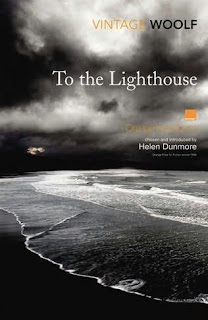
Revisiting To the Lighthouse
Image
As anyone who may look into this blog from time to time undoubtedly knows, Virginia Woolf wrote a number of modernist masterpieces.  It's hard for me to choose from among her novels, to name the very finest, because each has its own merits, its own unique contributions to the literary world.  But surely it would be impossible to consider modern literature without Mrs. Dalloway with its unfortunate light into Woolf's own life and demise.  Equally, To the Lighthouse , is remarkable for its insights into how a family thrives and does not thrive, how two people relate and refuse to relate. You really don't get much more pointed in such a discussion than this passage found on the very first page of the novel: from To the Lighthouse Virginia Woolf "But," said his father, stopping in front of the drawing-room window, "it won't be fine." Had there been an axe handy, a poker, or any weapon that would have gashed a hole in his father's bre...

Rashi--Elie Weisel

In Rashi , Elie Weisel gives us a very brief overview of the life, times and works of one of his spiritual guides and mentors and one of the great Jewish thinkers of all time.  It really is nothing more than a tantalizing glimpse, enough to whet one's appetite for more.  Or, if you're of a mind to become acquainted with a great thinker and scholar, perhaps enough.  Myself, I'd like to read and understand more about this thinker's influence on Judaism and ultimately the world at large, because much of his work was translated into Latin and influenced Medieval thought about the Old Testament. Recommended--****  minus one star for extreme brevity.

Variant--Robison Wells

Image
The latest contribution in what is becoming a well-worn track in teen fiction.  Epitomized by Suzanne Collins's Hunger Games series  and continued in a myriad of others such as James Dashner's The Maze Runner series, the teens-in-danger zeitgeist recurs here.  But it is also very much part of a newer genre--the teens without guidance, the teens without adults,  and the teens threatened by adults (see Dashner). A troubled teen who is shuttled from foster home to foster home applies to attend a very elite school in the wilds of Northern New Mexico.  He is dropped off by a woman who zooms away, pursued by two of the school inhabitants, but only after they have given our hero a mysterious message. It doesn't take long to discover that there is something very wrong about this school.  There are no adults. None.  No one to do the teaching except other students, no one to do the cooking, maintenance, etc.  And from there, the story becomes one l...

Ignorance of Faith

While I am interested in and sensitive to Mr. Juan Williams's plight in having be chastised for stating an opinion that has crossed the minds of most thinking American's even as they did not allow it to become the signpost and guide for their thinking, such profound ignorance as is expressed in the passage that follows cannot be allowed to pass without comment: from Muzzled: The Assault on Honest Debate Juan Williams Catholic leaders threaten to deny politicians the right to communion if they disagree with the church hierarchy, without acknowledging that there is a major divide on the issue of abortion among the most faithful Catholics. There are several disturbing points in the passage most of which stem from the fact that I sincerely believe that Juan Williams thinks he understands Catholicism, the faith, and what Church Leaders are and do. Let's start with the simplest--there is no "right" to communion.  Indeed the word implies that one is united with...

Quotation of the Day

I wanted to preserve this random Quotation that showed up on the site because, while I may not necessarily agreed with all that it entails, I think it captures a sense of mystery perfectly.  Oh, and it is lovely, absolutely lovely. Life is a luminous halo, a semi-transparent envelope surrounding us from the beginning of consciousness to the end. Virginia Woolf (1882-1941)

The Poetry of William Carlos Williams of Rutherford--Wendell Berry

Literary criticism is the sincerest form of fiction.  It wasn't actually this book that inspired the thought, but it helped to carry the thought to its fruition--I was reading a book on Ulysses by one of the great Joyce scholars and thought what an elaborate array of fictive devises had been invented to explain what essentially needs no explanation.  Literary criticism was the predecessor (and now shares the domain with) fan fiction. I'll elaborate more on that point at another time--but for now let's consider Wendell Berry's book on William Carlos Williams.  What I profoundly admired in this book was not so much the image of Williams or of Williams's poetry that comes forth (upon reading the book I did not/do not feel inspired to run out and try to push myself--once again--through the book-length maundering Paterson ) but some of the observations about literature, life, and writing that occur along the way.  For example from The Poetry of William Carlos Willia...

The Mating Season--P. G, Wodehouse

Well, I'm pleased to report that I finally pushed my way through my first (and very likely last) P. G. Wodehouse novel.  I've read selected shorts here and there and always wanted to attempt a novel.  Now, with the backing and help of my book group, I've done so--a milestone accomplishment. However, I fear the task was accomplished with dismal results.  My report will not tickle the ears of many, because I found Wodehouse the literary equivalent of the Three Stooges when I was hoping for the Marx Brothers.  Reading through this story of mixed up identities at the house of the fearsome Aunts, I was constantly amused and frequently dismayed.  Dismayed, because it seemed that every line strained so hard to amuse, tried so hard to be funny, worked feverishly to entertain, with the net result that the entertainment value, for me, was diminished.  And perhaps the most telling point of all--Jeeves and his actions occupies all of about twenty pages in the entire ...

The Painted Veil--W. Somerset Maugham

I can say with some pleasure that this is the first of Maugham's books that I have ever finished.  I've tried many-- Cakes and Ale, The Moon and Sixpence, The Razor's Edge, Of Human Bondage , and none of them ever quite did it for me.  Maugham's style is rather flat and his plots and events something of potboilers.  And so it is with this one as well. However, in this case, I like the particular pot that was boiling.  The Painted Veil reads a bit like a two-penny version of any of Greene's great works (I'm thinking here of The Heart of the Matter or The End of the Affair as particular examples).  Whereas Greene prefers Africa for his exotic locale, Maugham has chosen China to set his story of infidelity, broken marriage, and redemption. Vane, shallow, brow-beaten Kitty marries an infatuated intellectual--Walter Fane.  Walter Fane is a bacteriologist in the service of the Royal Colony of Hong Kong and he soon enough sweeps her away to that dismal land...

Another Startling View of WCW

from The Poetry of William Carlos Williams of Rutherford Wendell Berry But after thinking of both of them for many years, I believe that the person to whom Williams can be most suggestively compared is his younger contemporary, William Faulkner. They are nothing alike in their ways of writing or in their subjects. They dealt with two distinct varieties of American disorder: Williams with the accumulating mass of detail in the rapidly industrializing New Jersey suburbs of New York City, Faulkner with (among other things) racial division both within individuals and among people who lived more or less together and sometimes were kin to one another.  Both dealt, in different ways, with the reduction of the country's original abundance to a sum of exploitable and deteriorating "resources" for industry. They seem to have been, if not similarly, then equally burdened by their subjects--not, as with many writers, subjects sought out or acquired, but subjects that they inherite...

More on Williams

from The Poetry of William Carlos Williams of Rutherford Wendell Berry The now-prevailing idea seems to be that poets occupy their designated place in the departmented structure of the arts and sciences, of which the increasingly industrialized modern university is the model. Poets, that is to say, are professional like other professionals and specialists like other specialists. Their business is to produce, ideally, perfect poems of lasting value individually, as objects of art or "high culture." This assumption seems to underlie the judgment of such dismissive critics as Donald Davie and Bruce Bawer. Precedent to them was Yvor Winters, who, admirable as he was in some ways, ranked individual poems as the greatest ever, greatest in English, etc. as if the art of poetry were a sort of contest. Increasingly, moreover, poets are attached to universities and are dependent upon them for a living. I have been at times so attached and so dependent myself, and thus I know somethi...

On Williams Redux

from The Poetry of William Carlos Williams of Rutherford Wendell Berry He was learning to make of his own language a work that could be nothing but a poem--that could not be replaced by a picture, say, or by anything in prose.

Soft and Others--F. Paul Wilson

I had three books to review.  I thought I'd start with the easiest.  For fans of dark fantasy/horror, it's really very simple--get it and read it.  I don't know if it is any longer available in print; however, it is easily available in Kindle format and is bargain-priced at $2.99. This book is worth that price for three stories along--"Cuts," "Buckets," and "Soft."  Add to that the "prequel" or backstory to The Touch --"Dat Tay Vao" and you have a superb collection.  And those are only the highlights.  "Cuts" is a nasty revenge tale that very nicely shows the position of those who seek revenge.  "Buckets" is a disarming and difficult tale that addresses a modern topic in a way that many readers simply will not care for--but for those of a bent similar to mine, simply puts the truth out there to see.  And of "Soft" Wilson indicates in his preface that it was inspired by the incipient epidemic o...

Jack: Secret Circles--F. Paul Wilson

I have always liked F. Paul Wilson's work--ever since The Keep I have paid attention on and off, and as I read more, I realize that I should probably have been paying more attention.  Now I have a lot of catch-up to do.  Which is a good place to be. Jack: Secret Circles is the second in a trilogy of Repairman Jack books intended for the YA market.  In this work Jack learns a life lesson about how repairs don't always take right and what is being repaired may indeed need to be replaced.  The story of the relic found in the previous book continues and we learn something more about the mysterious Lodge that seems to figure large in the tale. Wilson promises that these three novels will have a prominent role in the last Repairman Jack novels, whenever they may be produced. During the weekend also took in a large portion of Soft , the first of the short story collections.  Particularly wanted to read "Dat Tay Vao" as it has importance for The Touch .  Bu...

Jack: Secret Histories--F. Paul Wilson

Since the time of The Keep (which in the demise of our much beloved Borders, I have repurchased with intent of rereading), F. Paul Wilson has been one of my favorite purveyors of dark fantasy.  Recently I read and reviewed his riff on the classic vampire story, Midnight Mass , and now it is my pleasure to record impressions of the first of a series (likely a short series) that he has written for the YA market. Jack: Secret Histories is a Repairman Jack novel set in Jack's teen years.  Jack, his friend Weezy, and her brother Ed are out exploring the edges of the Pine Barrens in New Jersey.  In the course of their work, they discover a dead body and a mysterious artifact.  From there the story is a roller coaster ride as they try to decipher the meaning of the artifact, the facts about the dead body and its relationship to a mysterious Lodge, and the realities of teen life int he 70's and 80's. The story is deftly told, with Wilson's customary aplomb, but absent m...

Pondering The Pale King

Considering DFWs posthumous opus maximus

Reviewing Wood

On How Fiction Works . I note this review because I'm ambivalent about the book.  I've read it once and read at it a couple times after.  I'm not sure how much I agree with the essential oils pressed from literature.  I'm not certain where I stand with respect to where Wood stands. In short, I probably didn't really understand it.  But the prose is engaging and readable, if, one sometimes observes, sparser than one might like.  I recommend the book to all--if only as an antagonist (which is not the way it is to me, as I've said above)--it is worthy of consideration.

Midnight Mass--F. Paul Wilson

Of recent date, I have been so preoccupied with getting things done for home and work that I haven't had the wherewithal to indulge in any extensive or demanding reading.  Sometimes my brain just needs candy (as you've probably noted with some of my reviews).  This is an example of candy, but intriguing candy. Midnight Mass is a story about vampires.  Not your sparkly teen-angst vampires, nor your tortured byronic (I call them moronic) hero vampires.  No, this hearkens back to the bad old days of Salem's Lot and They Thirst.  There's nothing noble or exalted or wonderful or thoughtful or kind or meaningful about this bunch.  They are about destruction and blood.  Period.  Could care less about art, science, technology, literature, or humanity (except as a food source). The story starts with the Vampires having taken most, if not all of Europe and Connected Asia.  They made it to the East Coast of the United States and the assault on the...

David Lodge on H. G. Wells

Prophet of the Sexual Revolution Yet one more reason to look askance at Mr. Wells.  Some wonderful work, but some dubious thought.

Literary Haunts

Woolf in London I am an inveterate "literary tourist."  On a geology field expedition to a GSA convention in Macomb, Illinois, I felt unavoidably dragged to Spoon River and the birthplace of Edgar Lee Masters.  I took a trip up to Amish Country in Ohio to visit Winesburg (which is not at all situated as Sherwood Anderson would have us believe).  I've walked through Dublin with Joyce and on my one trip to Fort Lauderdale when I was on my own, I went looking for Slip 17 at the boat club where Travis McGee docked "The Busted Flush." So, naturally, articles like this really appeal to me.

"The Secrets of Boys"

An interview with a researcher who has been looking at friendships among boys. Extremely interesting.